
 admin
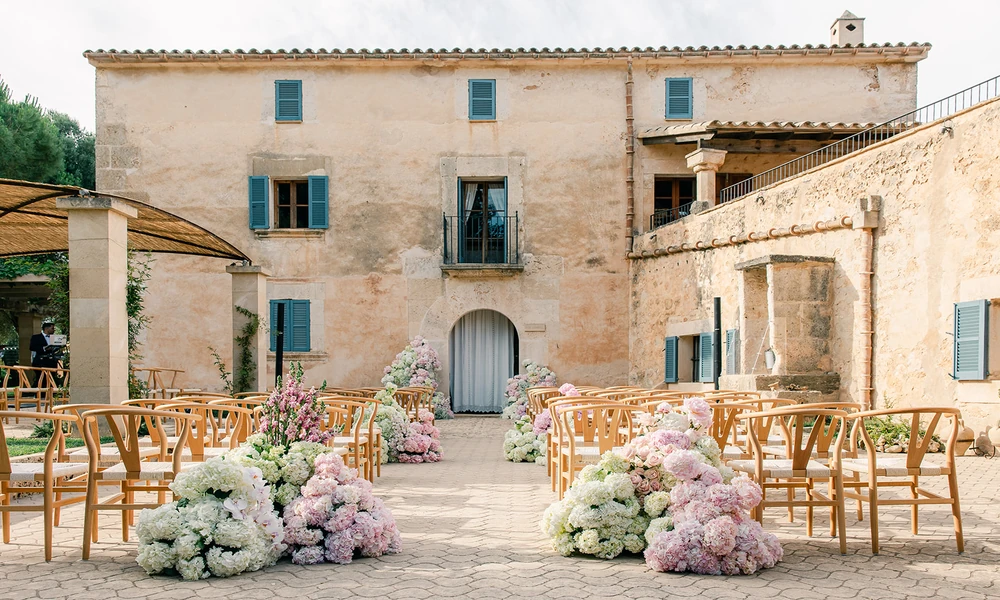
Two days before her parents’ wedding anniversary, an actress married her partner inside a Florida garden that books out a year ahead. She got the date because another party canceled. That’s the whole story in one sentence, and it’s also the most useful planning lesson you’ll read this month: landmark venues reward the couples who stay flexible on dates but stubborn about the vibe.
The celebration in question was the Gil Perez-Abraham wedding, an Italian Renaissance style gala at Vizcaya Museum and Gardens in Miami. I’ve walked those stone terraces in July humidity, and I’ve watched planners try to bend them to a modern Pinterest mood board. It rarely works. The estate wins. Your job is to design inside its rules.
So here’s what you’ll get below: how historic properties actually operate, a contingency system I call the Three-Layer Weather Stack, a decision table for choosing between a landmark estate and a private resort, and the timing mistakes that quietly wreck garden receptions. No fluff, no vendor pitch.
Why do landmark estates book out so far ahead?
Because supply is fixed and demand is emotional. You can build a new ballroom. You can’t build another 1916 estate on Biscayne Bay. That scarcity pushes prime Saturdays a year or more out, which is exactly why the couple here landed their date through a last-minute cancellation rather than a two-year campaign.
Here’s my contrarian take, and planners will fight me on it: stop chasing a specific Saturday. Pick a season, pick three weekends, and let the venue availability drive the calendar. You’ll get better vendor crews because you’re not competing with every other couple for the same photographer on the same night, and you’ll often negotiate softer minimums. The date is a line on an invitation. The place is the memory.
One more thing about historic properties. They’re usually stewarded as public cultural assets, and the National Park Service frames preservation of places like these as a shared civic trust, which is the honest reason your caterer can’t torch salmon under a 400-year-old oak. Rules you find annoying are often legal obligations the estate can’t waive for anyone, famous or not.
Build the Three-Layer Weather Stack before you sign anything
Outdoor ceremonies fail for one boring reason: the backup plan lives in someone’s head. Build the stack in writing and attach it to the contract.
- Layer one, the shift. Can the ceremony move two hours earlier or later the same day? Check sunset time for your date against official climatology rather than guessing.
- Layer two, the swap. Name the exact indoor room, confirm its capacity, and get the fee for that swap in writing.
- Layer three, the shelter. Tents, covered loggias, or a hard out at a nearby indoor space you’ve actually toured.
I’d rank layer two as the one couples skip and regret. Event teams at public gardens typically can’t promise a room they don’t control, so you need to know who holds the keys and what triggers the call. Put a decision deadline on it, like 3 p.m. day-of, and name the one person authorized to make the call. National Weather Service forecasts are good enough at that range to make a real decision instead of vibing one out.
Landmark estate or private resort? A quick decision table
Most couples I talk to are deciding between these two and treating it like a taste question. It’s a logistics question. Run your situation through this and the answer usually falls out.
| Factor | Historic estate | Private resort |
|---|---|---|
| Vendor freedom | Often restricted to approved lists | Usually in-house or flexible |
| Weather control | Limited, architecture sets the terms | Indoor backup is standard |
| Photo variety | Enormous, gardens and stonework | Depends on the property |
| Guest logistics | You handle shuttles and parking | Bundled with the room block |
| Cost shape | Rental plus every vendor separately | One bundled number |
| Feel | Cinematic, one-of-a-kind | Comfortable, repeatable |
If your guest list skews older or travel-heavy, the resort wins on kindness alone. If your crowd will happily wander a garden with a negroni, the estate wins on atmosphere, and it isn’t close. My pick for a couple with a strong visual vision and a planner they trust: the estate. For a couple planning from another state with a tight crew: the resort, every time.
The details that separate a great reception from a pretty one
Food is where a wedding gets remembered or forgotten, and it’s also where couples overthink. The pair in our story reportedly arrived at their tasting with no cuisine demands, just a request that the food be exceptional. That’s the right brief, honestly. A kitchen that designs around your history, your family’s favorites, the thing your grandmother made, will outperform a menu you copied from a magazine.
The sweet spot is a menu that reads like a person, not a catalog. Three passed bites that echo your childhood, one plated course with a story, a dessert that isn’t a naked cake. And yes, feed the vendors. Photographers and bands work a nine-hour day and the last hour of your reception is entirely in their hands.
The estate’s own history matters here too. Places like Vizcaya belong to a layer of American cultural heritage documented by the Library of Congress, and guests do feel it. Lean into it. Print the original construction year on the program. Give your officiant one sentence about the property. You’re renting a piece of history, so let the room do some of the storytelling for you.
A run-of-show you can steal
Garden estates share a rhythm problem: everyone wants the golden-hour light and the same 40 minutes. Stagger it.
- Ceremony one hour before sunset, no exceptions, and no “waiting a few minutes for stragglers.”
- Cocktails immediately after in a different zone so the ceremony space can reset for photos.
- Guests move to dinner when the light is gone, roughly 20 minutes after sunset.
- Speeches during the first course, not between courses, so the kitchen doesn’t hold plates.
- Cake and dancing under artificial light, since by then nobody cares about the sky.
- Second wind snack before the last hour, and make it salty.
Sound simple? Every item on it is something I’ve watched a real wedding botch. The straggler rule is the big one. Once one couple learns the ceremony waited for them, the next 30 guests all assume they can run late.
The takeaway for anyone planning a landmark wedding
Pick the place for how it will feel at 6 p.m. in the light you can’t fake. Then treat flexibility as currency: on dates, on vendors, on indoor rooms. Write your backup plan down, name the person in charge of it, and let the venue’s rules guide your design instead of fighting them.
Because the couples who get the date after a cancellation aren’t lucky. They’re ready. So what’s actually stopping you from locking the venue and letting the rest of the details fall in line?